About CENATEC Contact Us
Industrial Diagnostic Methodology

Most industrial downtime
is not a system failure.
It is a diagnostic failure.

CENATEC implements a structured, failure-based diagnostic methodology that develops practical fault-resolution capability in industrial maintenance and automation personnel. The result: reduced unplanned downtime, eliminated speculative component replacement, and standardized root-cause resolution protocols.

01 — The Problem

The gap is not knowledge. It is methodology.

Maintenance personnel in automation-intensive industrial operations generally understand how systems work. What they lack is a repeatable, structured process for working through those systems when they are not behaving as designed.

The prevailing approach to industrial maintenance capability development is content-based: personnel receive instruction in system components, wiring diagrams, and operational parameters. What is systematically absent is failure-anchored diagnostic programming — programs built around documented, real-world fault patterns that develop practical fault-resolution competence.

This is not a question of workforce intelligence or general technical knowledge. It is a question of methodology. The diagnostic gap is present in any operation where maintenance teams are expected to resolve faults independently but have never been given a structured process for doing so.

The consequences are measurable, recurring, and operationally significant — regardless of sector.

Operational Consequences of the Diagnostic Gap
01
Extended Unplanned Downtime

Misdiagnosed faults in automated and electromechanical systems produce extended stoppages that correct diagnosis would resolve in a fraction of the time.

02
Speculative Component Replacement

Parts are substituted based on the most visible symptom rather than confirmed root cause, increasing costs and introducing secondary failures.

03
Chronic Failure Recurrence

The same fault point fails repeatedly because the originating condition was never correctly identified or documented.

04
Unnecessary OEM Dependency

Qualified in-house personnel escalate fault scenarios they should be able to resolve independently, creating structural fragility and cost escalation.

05
Premature Return to Service

Equipment is returned to operation before resolution of the originating fault condition is confirmed, producing rapid recurrence.

02 — The Methodology

Structured Failure-Based Diagnostic Methodology Framework (SFBDM)

The SFBDM framework was developed and validated over eleven years of applied institutional practice at SENAI — Brazil's National Industrial Apprenticeship Service and the largest industrial capability development system in Latin America. It is not a generic program. It is a methodology built from documented industrial failures across active production environments, now being implemented in the United States through CENATEC Technical Services LLC.

Stage 1 — Fault Identification

Structured Signal Observation

Personnel develop systematic protocols for reading all available system signals — electrical, pneumatic, hydraulic — before reaching any diagnostic conclusion. Programs are built around scenarios where multiple symptoms must be distinguished before any intervention decision is made. Eliminates premature diagnosis driven by the first visible symptom.

Output

Confirmed signal inventory prior to hypothesis formation

Stage 2 — Signal Interpretation

Fault Pattern Recognition

Observed signal combinations are matched against a structured library of documented failure modes specific to the system types in the facility. The fault library is derived from actual failure records — not theoretical references. Converts raw observation into informed, ranked diagnostic hypotheses.

Output

Ranked hypothesis set aligned to documented failure modes

Stage 3 — Root Cause Analysis

Causal Chain Isolation

Personnel trace and document the complete causal chain: originating condition, propagation pathway, and contributing factors. Programs pair scenarios where different root causes produce identical surface symptoms — requiring causal reasoning rather than pattern matching alone. Distinguishes proximate failure from root cause.

Output

Documented causal map sufficient to support corrective action

Stage 4 — Intervention Selection

Validated Corrective Action

Corrective interventions are selected based on confirmed root cause — not on symptomatic replacement. Decision scenarios require personnel to justify intervention selection against Stage 3 causal analysis. Directly targets the operational and economic impact of speculative component substitution.

Output

Justified intervention decision with documented rationale

Stage 5 — Post-Repair Validation

Confirmed Resolution Protocol

Equipment is not returned to service until resolution of the originating fault condition — not merely the visible failure — has been confirmed under controlled conditions. Addresses a systematically underperformed step in standard industrial maintenance practice.

Output

Validated resolution confirmation and documented fault cycle record

03 — Implementation

How the SFBDM Framework Is Implemented

Facility Diagnostic Profile (FDP)

Each implementation begins with a Facility Diagnostic Profile — a structured assessment of the facility's actual failure environment: documented fault patterns, equipment types, operational sectors, and diagnostic capability baseline of the maintenance team. Program content is calibrated to that specific environment. There is no standard program.

Phase I

Facility Assessment

Review of maintenance records, equipment documentation, and failure history. Structured observation of maintenance team diagnostic practice. Baseline competency mapping against SFBDM Stage requirements.

Phase II

Fault Library Development

Compilation and classification of facility-specific failure scenarios by system type, frequency, and operational impact. Validation against maintenance records and equipment specifications.

Phase III

Program Design

Development of stage-structured diagnostic programs using validated failure scenarios as the core content vehicle. Sequencing by diagnostic complexity and operational priority.

Phase IV

Program Implementation

Delivery of structured diagnostic programs using laboratory simulation, equipment-based fault injection, and scenario-based exercises. Incremental progression through Stages 1–5 with observable performance assessment.

Phase V

Validation & Documentation

Post-implementation assessment of diagnostic performance against baseline. Documentation of fault library updates and program refinements. Institutional knowledge capture for ongoing facility use.

04 — Applicability

The diagnostic gap appears wherever automated systems are operationally critical.

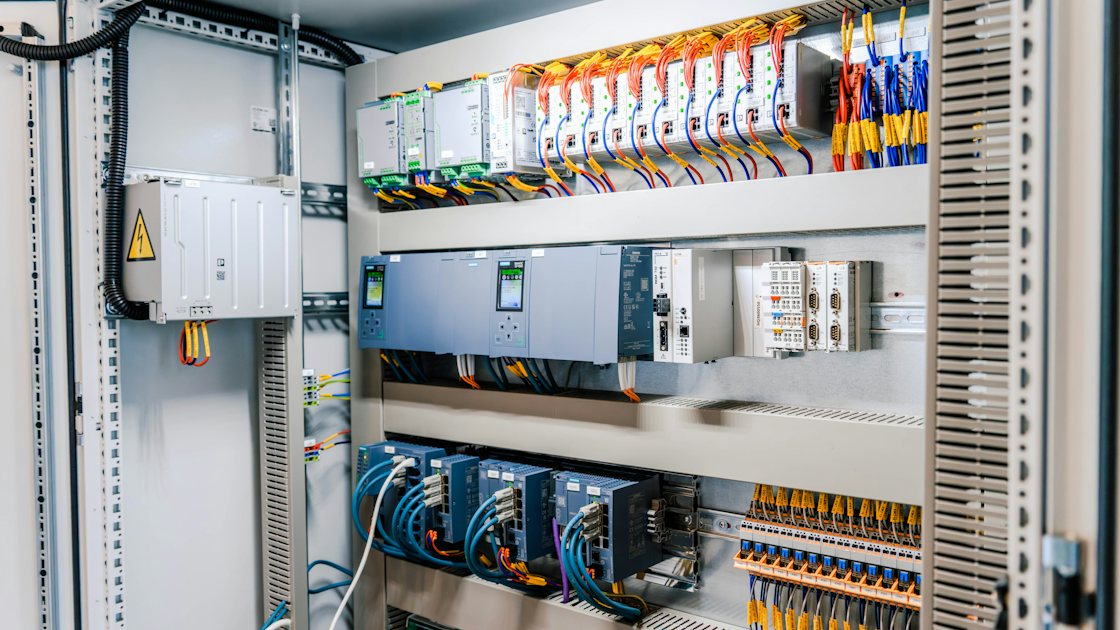
The pattern — system knowledge without a structured diagnostic process — is not sector-specific. It appears in any industrial operation where faults in automated or electromechanical systems have real operational and economic consequences, and where maintenance teams are expected to resolve those faults independently.

The SFBDM framework's fault-library structure allows program content to be calibrated to sector-specific equipment types and failure environments without altering the underlying five-stage diagnostic methodology.

If your operation depends on automated or electromechanical systems and your maintenance team resolves faults by experience and assumption rather than by structured process, the diagnostic gap is present.

  • Manufacturing operations with PLC-controlled equipment and electromechanical drive systems, where unplanned stops carry direct per-hour production costs.

  • Continuous-process industries where unplanned shutdowns trigger cascading operational consequences and regulatory compliance implications.

  • Energy and utilities environments where diagnostic errors affect system reliability at scale and where OEM dependency creates structural operational fragility.

  • Automation-intensive facilities where the gap between system design sophistication and technician diagnostic capability is widest — and most consequential.

  • Any industrial operation where maintenance teams are expected to resolve faults independently but have never been given a structured process for doing so.

05 — About

Felipe Vidotto Marins

Industrial Automation & Electrical Systems Specialist — Developer of the SFBDM Framework

Felipe Vidotto Marins is an Industrial Automation and Electrical Systems Specialist with over twenty years of experience integrating hands-on industrial fault diagnosis with large-scale diagnostic capability development. He is the founder of CENATEC Technical Services LLC and the developer of the Structured Failure-Based Diagnostic Methodology Framework.

From 2004 through 2011, he served as Técnico de Ensino across three SENAI units in São Paulo state — SENAI Suíço-Brasileiro (April 2004–December 2005), SENAI São Bernardo do Campo (January 2006–December 2008), and SENAI Escola Gaspar Ricardo Junior, Sorocaba (January 2009–May 2011) — delivering applied diagnostic programs directly within active industrial facilities including Volkswagen, Karmann-Ghia, and Mercedes-Benz. That direct contact with real industrial failures was the origin of the SFBDM framework.

From 2011 through 2015, he served as Technical-Pedagogical Coordinator at SENAI Centro de Treinamento CT 7.94, Ourinhos, São Paulo — coordinating 36 technical specialists across 5 specialized laboratories and 12 industrial workshops, overseeing 3,375 annual enrollments across 11 municipalities, and systematically translating industrial company diagnostic needs into structured capability development programs.

36
Specialists Coordinated
3,375
Annual Enrollments
11
Municipalities Served
5
Specialized Labs
12
Industrial Workshops
11+
Years at SENAI-SP
Professional Credentials & Memberships
CREA-SP Brazil's official engineering and technical regulatory body
ISA — International Society of Automation Active member — U.S. automation professional community
NECA — National Electrical Contractors Association Active member — U.S. electrical industry network

About CENATEC Technical Services LLC

Established in South Carolina in November 2025 as the operational platform for implementing the SFBDM framework within U.S. industrial operations. Works with manufacturing, process, energy, and automation-intensive facilities to develop structured diagnostic capability in maintenance and automation personnel.

06 — Contact

Get in Touch

If you are dealing with recurring diagnostic failures, extended downtime, or OEM dependency in your maintenance operations, we are available to discuss whether the SFBDM framework is applicable to your environment.

Every engagement begins with a Facility Diagnostic Profile assessment — a structured review of your operation's actual failure environment — before any program content is proposed.

South Carolina, USA
contact@cenatec.org